



Brain Tumour Patients Deserve Better
Brain tumour patients deserve better. Discover four priorities for South Australia and how you can help advocate for better research, care and support.
A brain tumour diagnosis changes everything.
But for many South Australians, the diagnosis is followed by another challenge: navigating a health and support system that can be difficult to understand, fragmented and does not always provide the services they need.
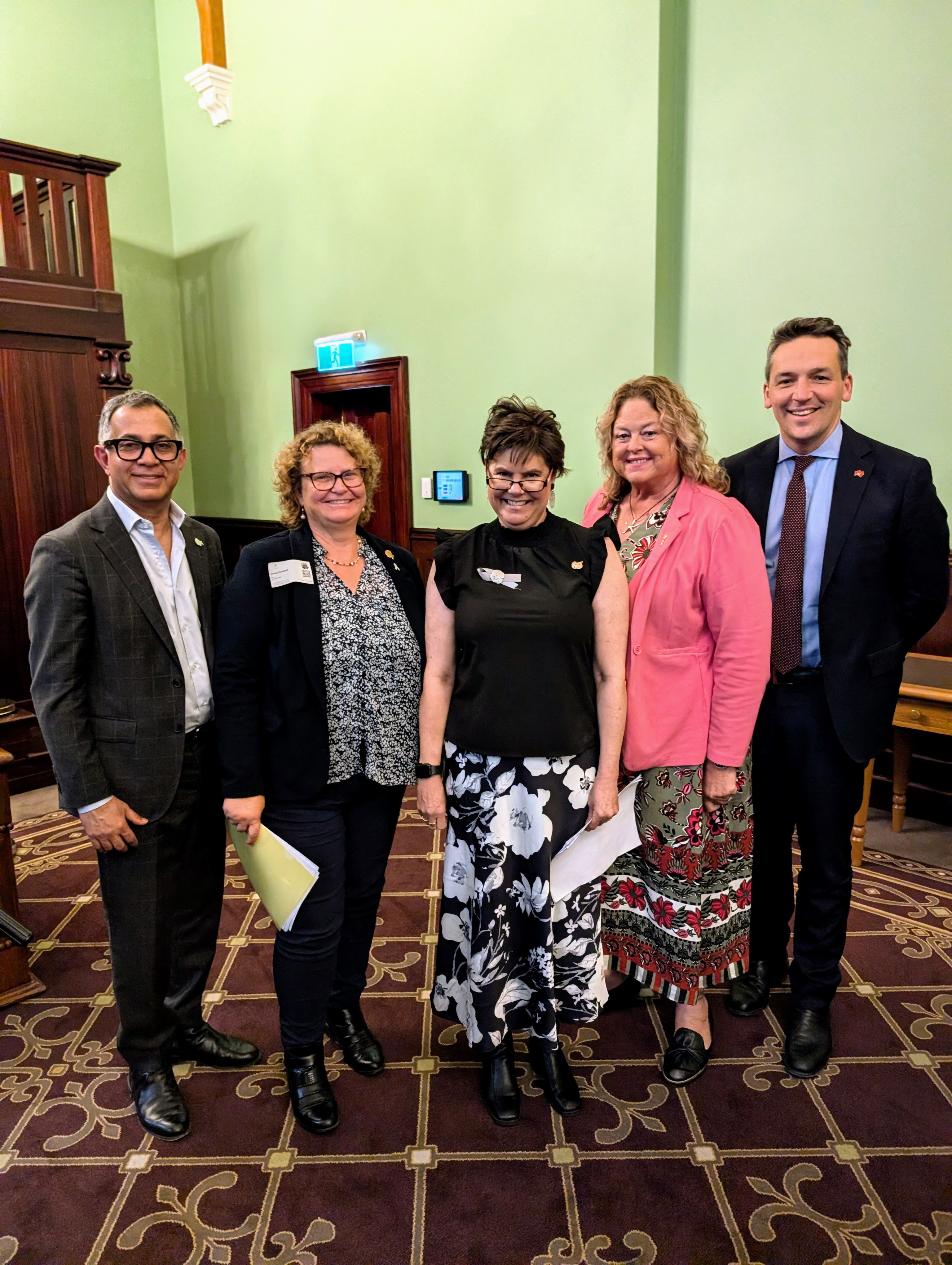
That was the message at a special briefing at Parliament House on 1 September, co-hosted by Nat Cook MP and SA Health Minister Blair Boyer MP.
The NeuroSurgical Research Foundation joined brain tumour patient Kyla and neurosurgeon A/Prof Santosh Poonoose to share the realities of brain tumour care, research and support in South Australia.
Kyla's Story
“Despite my 20 years in healthcare, I did not know where to turn.”
Kyla was diagnosed with a brain tumour in 2025. As a healthcare professional herself, she knew the medical system — but suddenly found herself on the other side of it.
Her experience shows why dedicated support, coordinated care and better access to research are so important.
“Research is time. Research is independence. Research is a mother remaining with her children. Research is a future.”
Hear Kyla's Journey in her own words
What needs to change?
1. Invest in research and clinical trials
Brain cancer remains one of the most underfunded areas of cancer research, despite its devastating impact on patients and families.
There are more than 120 different types of brain tumours. They are not one disease — and therefore there cannot be one treatment or one cure.
Research is how we develop better treatments and give patients more time.
But patients also need equitable access to the research that is already happening. As A/Prof Poonoose highlighted:
“Every appropriate South Australian brain-tumour patient should be systematically screened for clinical trials — in South Australia, elsewhere in Australia, and for molecularly matched or precision-medicine studies. A patient's postcode, treating hospital or financial circumstances should not determine whether they have the opportunity to access a potentially appropriate treatment.”
We don’t want South Australians simply to receive yesterday’s standard of care. We want them to have access to tomorrow’s treatments as well.
2. Create a coordinated statewide care pathway
When someone is told they have a brain tumour, their world changes in minutes.
They can suddenly be navigating neurosurgery, oncology, radiation, rehabilitation, disability services, employment and financial support — while also dealing with the physical and cognitive effects of their tumour.
Patients should not have to work out where to turn on their own.
We need a coordinated statewide pathway that connects people with the right clinical, practical and emotional support from diagnosis — for every brain tumour patient, regardless of tumour type or grade.
3. Strengthen specialist support
Kyla knows firsthand what it is like to navigate the system without dedicated support.
Despite 20 years working in healthcare, she found herself overwhelmed and unsure where to turn after her own diagnosis.
“If an experienced nurse feels overwhelmed and lost, imagine how frightening this system can be for someone without medical knowledge, family support or financial security.”
South Australia’s first dedicated brain cancer support nurse at the RAH has demonstrated the value of having someone who understands the disease and can guide patients and families through it. Yet limited funding means access to this vital service remains restricted, with the current service supporting only patients with high-grade (Grade 3 and 4) gliomas.
Even this limited level of support has required ongoing funding from the NRF to help address the shortfall in government funding.
We need more dedicated brain tumour nurses, patient navigators, support groups, advocacy and practical support for patients and families.
4. Invest in the infrastructure, equipment and specialist workforce to turn South Australia's outstanding research and clinical expertise into better treatments
South Australia has outstanding researchers, clinicians, hospitals, universities and research infrastructure.
But patients can face delays accessing important services such as comprehensive molecular profiling, which can currently require samples to be sent interstate. Timely molecular information can help identify potential treatment options and clinical trials.
Vital infrastructure such as tumour biobanks supports research and the development of new treatments, but requires sustained funding to remain viable.
Hospitals and research institutions also need up-to-date equipment, while investment in the specialist workforce is essential to retain the expertise needed to continue this work.
As NRF Executive Officer Ginta Orchard stated:
“We have charities and community organisations already investing millions of dollars. We are not asking the Government to recreate the system. We are asking for support to strengthen and connect what already exists.”
Help us advocate
Contact your local MP
You can help us make sure the voices of people affected by brain tumours are heard.
DOWNLOAD TEMPLATE LETTER TO SEND YOUR MP
Make it personal
The most powerful advocacy comes from lived experience. Before sending your letter, consider adding a few sentences about what a brain tumour diagnosis has meant for you or someone you love.
You don't have to share anything you're uncomfortable sharing. Every story helps decision-makers understand the real-world impact of brain tumours.
Share your story
The NRF can help share your story across our website and social media pages to increase awareness of the impact of a brain tumour diagnosis on patients and families. If you would like to explore this further please contact kimberleycottell@nrf.com.au or submit your story here.
While we advocate for change, research cannot wait.
The NRF continues to fund the research, equipment, clinical trials and support that patients need today.
Thanks to the support of our community, the NRF funded more than $2.5 million in South Australian brain tumour research in the last two years alone.
DONATE TO BRAIN TUMOUR RESEARCH
We will keep advocating until brain tumour patients have the research, care and support they deserve.
