NF is a lifelong genetic condition that can cause tumours to grow on nerves throughout the body. No two people experience NF the same way.
For some, it affects learning, vision or mobility. Others live with chronic pain, repeated surgeries or the uncertainty of not knowing what comes next. Neurologically, NF can create tumours in the brain and spine that are sometimes inoperable.
Today, families from across South Australia are coming together with one shared goal: to support research that will improve the lives of everyone living with NF.
Research brings hope.
It helps us better understand why NF affects people so differently, develop new treatments, improve care and move us closer to a future where families face fewer challenges than they do today.
Our community says it best:
“Research may not help me now, but if it helps the children coming through, then it is a blessing.” - Brodie
“Maybe it’s the beginning of a cure.” - Jackson
“I’m excited to see what new things they learn about NF to make people’s lives better and save lives.” - Shelby
By supporting the NeuroSurgical Research Foundation’s NF research program, you are investing in hope, discovery and a better future for every person living with Neurofibromatosis.
Every donation, no matter the amount, helps take us one step closer.
Organoid Modelling to Decipher the Genotype-Phenotype Variability in Neurofibromatosis
NRF Funding: $49,672
Neurofibromatosis (NF) is a genetic condition caused by changes in the NF1 or NF2 genes. While some people experience relatively mild symptoms, others can develop serious and life-limiting complications.
One of the challenges in treating NF is that the condition can affect people very differently. Even individuals who carry the same genetic mutation can experience very different symptoms and disease progression. Currently, doctors cannot reliably predict how NF will develop in an individual, leaving patients and their families facing significant uncertainty.
This NRF-funded research program will use stem cell-derived organoids carrying patient-specific genetic mutations to investigate why NF affects people differently. By creating laboratory models that more closely reflect individual patients, the research aims to uncover the biological factors that contribute to this variability and improve our understanding of NF.
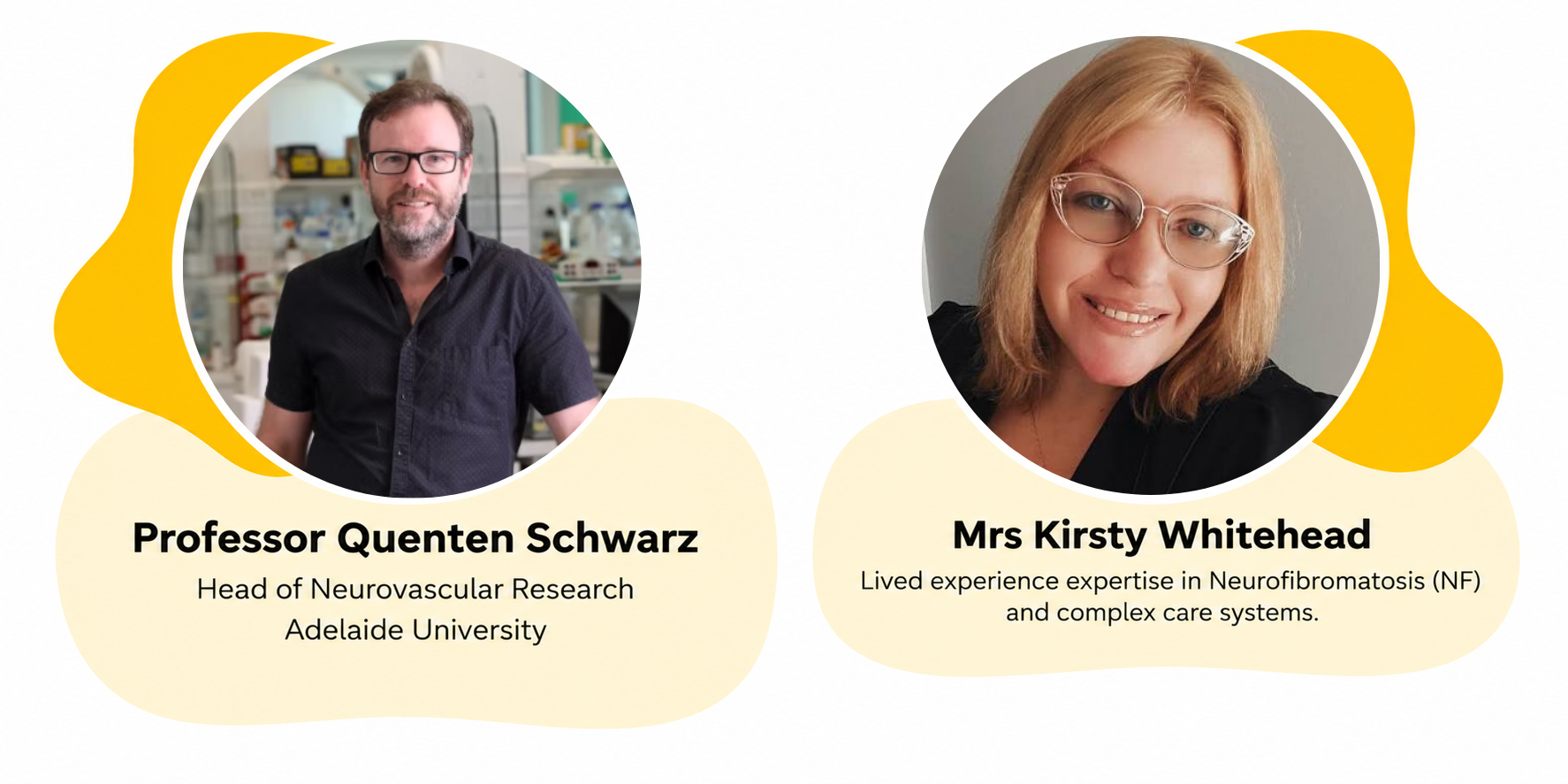
Research Lead
Professor Quenten Schwarz
Head of Neurovascular Research
Adelaide University
Lived Experience & Consumer Expertise
Mrs Kirsty Whitehead
Kirsty brings lived experience expertise in neurofibromatosis and complex care systems, alongside training and experience in governance, health policy and inclusive communication through leadership and advisory roles.
Why this research matters:
Understanding why neurofibromatosis progresses differently from person to person could ultimately help researchers and clinicians better predict disease outcomes and work towards more personalised approaches to care.