


Raising awareness. Supporting research. Creating better outcomes.
Stroke can happen to anyone, at any age. By understanding the signs of stroke, sharing potentially life-saving information and supporting research, we can help build a more informed community and contribute to better outcomes for stroke survivors and their families.
The NRF supports research and community education to improve our understanding of stroke, its long-term impacts and new approaches to treatment and recovery.
From learning how to recognise the signs of stroke to discovering the latest research being undertaken in South Australia, every step towards greater awareness helps turn knowledge into action.
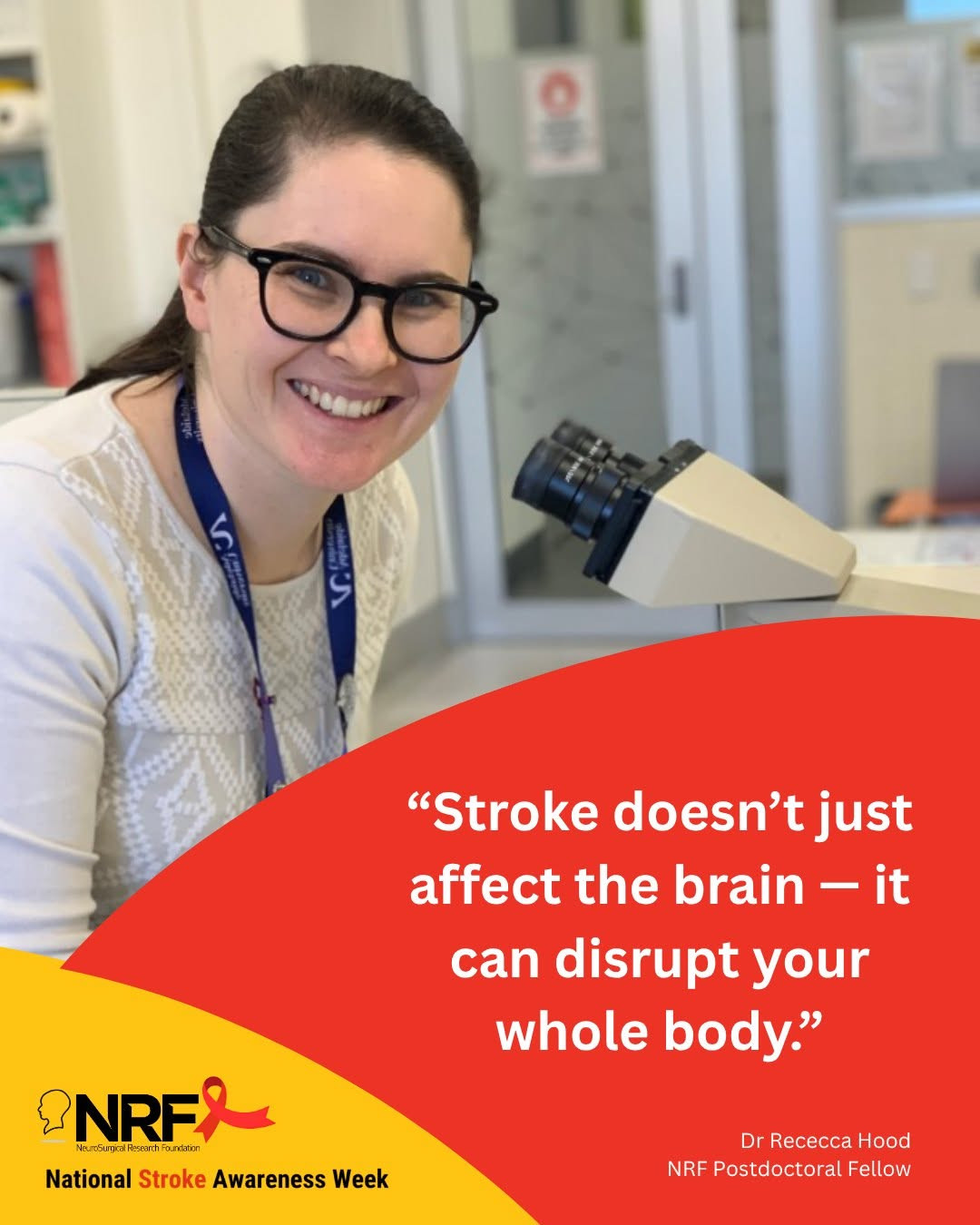
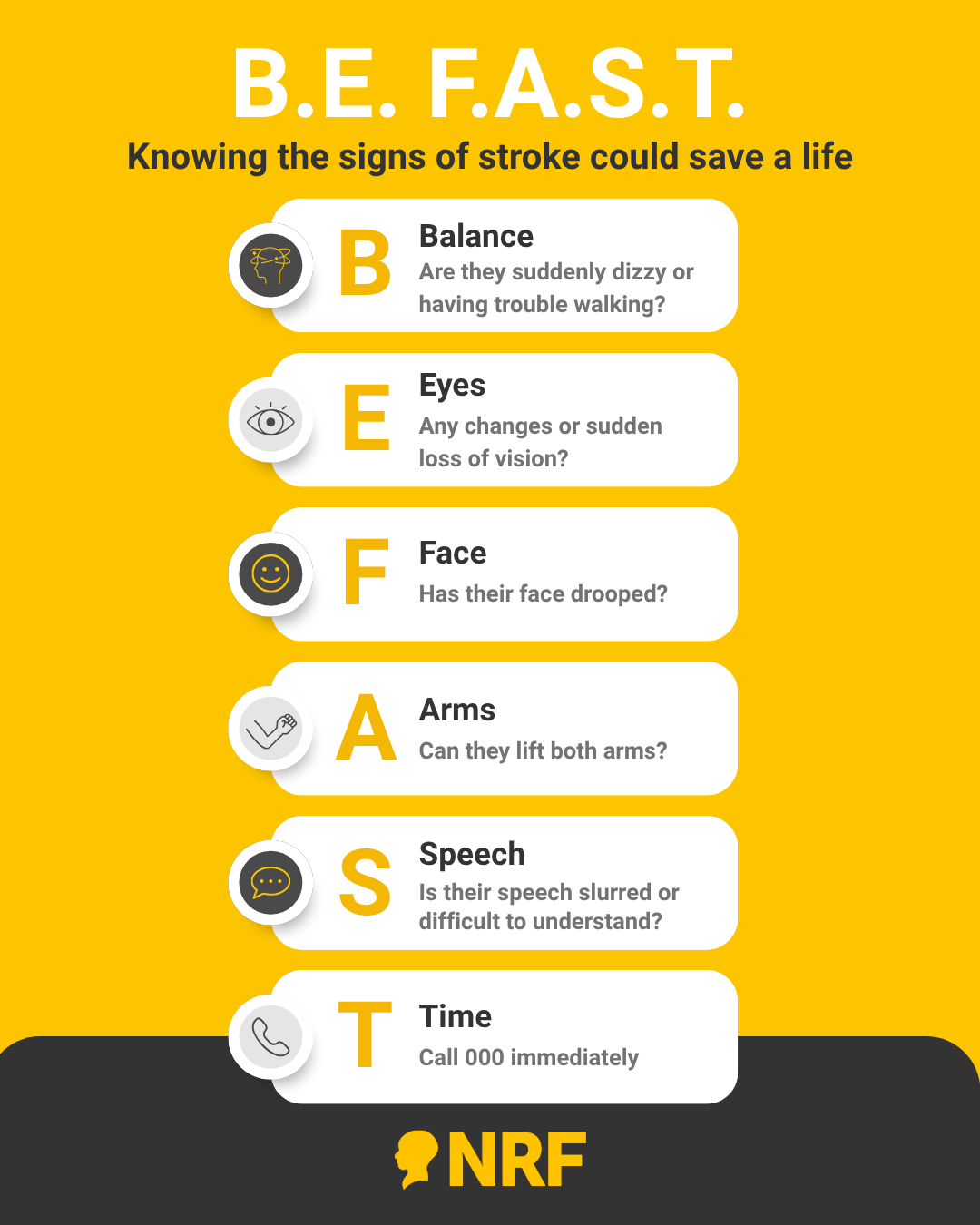
One of the most important messages is how to recognise the signs of stroke. Recently the stroke acronym was updated to B.E. F.A.S.T. - to incorporate the warning signs of posterior stroke, often characterised by vague symptoms such as dizziness, visual problems, headache and loss of balance.
Stroke researchers and clinicians can often be heard saying "time is brain". This is because during a stroke, you lose as many as 2 million brain cells per minute. This is one of the many reasons not to downplay the seriousness when it comes to the warning signs of a stroke.
So remember to think B.E. F.A.S.T - Balance, Eyes, Face, Arms, Speech, Time. When these symptoms appear suddenly and together don't "wait and see". It's important to think stroke and call 000 immediately - you could save a life.
Research is helping us better understand stroke, its effects on the brain and the challenges that can continue long after the initial event.
NRF supports researchers working to advance knowledge in neurosurgical and neurological conditions, including stroke. Through investment in research, we help support investigations into the causes, effects, treatment and recovery associated with stroke.
Our work connects researchers, health professionals and the community, helping to share knowledge and highlight the importance of ongoing investment in research.
Raising awareness is an important part of supporting better outcomes for people affected by stroke.
NRF works to share stroke education, research updates and stories from the people involved in advancing knowledge and supporting patients and families.
Community education can help people recognise the warning signs of stroke, understand the importance of seeking urgent medical attention and learn more about the research being undertaken to address its long-term impacts.
Through public education, researcher stories and community engagement, we aim to make research more accessible and encourage ongoing support for stroke research in South Australia.
Research takes time, collaboration and investment. Your support helps NRF contribute to research that aims to improve understanding of stroke and support better outcomes for patients and their families.
There are many ways to get involved:
Together, we can help turn awareness into action and support the next steps in stroke research.

