


A small gland. A big impact.
The pituitary gland plays a vital role in regulating hormones and many of the body's essential functions. When something goes wrong, the effects can be far-reaching.
Through research, we can improve our understanding of pituitary tumours and help advance the future of diagnosis and treatment.
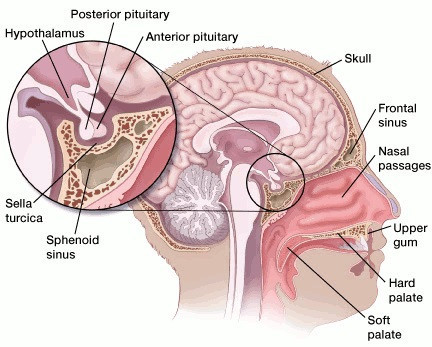
Pituitary tumours develop when cells in the pituitary gland grow abnormally. Although most are non-cancerous, they can still cause significant health problems by disrupting hormone production or pressing on nearby structures, including the nerves involved in vision.
There is still much to learn about what causes these tumours to develop, why they behave differently and how they can be treated more effectively.
Research is essential to answering these questions and improving outcomes for people affected by pituitary conditions.
Genetic drivers of pituitary tumour formation
NRF 2026 Vacation Scholarship Recipient: Jacob Deeb
NRF is proud to support Jacob Deeb through a 2026 Vacation Scholarship, enabling him to work with the SA Pituitary Research Group under the supervision of A/Prof Sunita De Sousa and her team.
Jacob's research is investigating how changes in selected genes may contribute to pituitary tumour formation. Using pre-clinical laboratory models, the project will explore how these genetic changes affect pituitary cell growth, DNA repair and hormone production.
By improving our understanding of the genetic mechanisms involved, this research could help inform future approaches to genetic testing and early detection.
Building knowledge. Supporting emerging researchers. Advancing neurosurgical research.
Meet our scholarship recipient
“Early engagement in research such like this is imperative for building the skills and knowledge to one day contribute to the field of neurosurgery as both a clinician and scientist.”
Jacob Deeb, NRF 2026 Vacation Scholarship Recipient

Behind every research project is the potential to discover something that changes how we understand, diagnose or treat a condition.
Your donation helps NRF continue investing in neurosurgical research and the researchers working towards better outcomes for patients and their families.
Support pituitary research today.

