



Vitamin C Brain Swelling Treatment Shows Promising Results Progressing to Clinical Trial
Encouraging results from NRF-supported research at the Royal Adelaide Hospital are paving the way for a first-in-human trial investigating high-dose Vitamin C for traumatic brain injury.
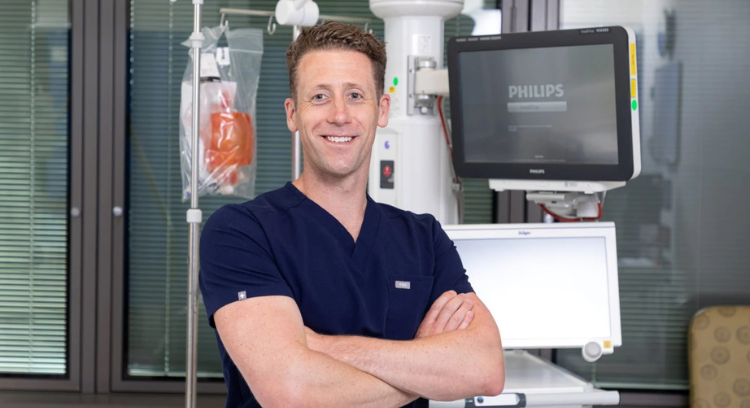
Vitamin C Brain Swelling Treatment Shows Promising Results and Moves Toward Clinical Trial
Could high-dose Vitamin C help treat dangerous brain swelling after traumatic brain injury?
Encouraging early results from research supported by the NeuroSurgical Research Foundation (NRF) suggest it might.
Researchers Dr Aniket Nadkarni and Associate Professor Mark Plummer have been investigating a new treatment using sodium ascorbate — a specially formulated, salty form of Vitamin C — designed to reduce pressure in the brain after injury while also protecting brain cells from further damage.
Following promising results in pre-clinical models, the research is now progressing to a first-phase clinical trial at the Royal Adelaide Hospital.
Why brain swelling is so dangerous
After a traumatic brain injury (TBI), swelling inside the skull can increase pressure on the brain and cause additional damage to already injured tissue.
Current treatment often involves hypertonic saline, essentially table salt dissolved in water, which is used to draw fluid away from the brain and reduce pressure.
While this approach can be life-saving, it does not protect brain cells from injury and can cause harmful side effects if used at very high doses.
Researchers have long been searching for treatments that can both reduce swelling and help protect vulnerable brain cells.
A new approach using Vitamin C
Dr Aniket Nadkarni and A/Prof Mark Plummer, with collaborators from The Florey Institute of Neuroscience and Mental Health, have developed a new salty formulation of Vitamin C that can be safely delivered in very high doses.
Associate Professor Plummer explained,
"Vitamin C is required for normal brain function and because the brain is such an active organ it concentrates vitamin C to levels 80 times higher than in the blood. Following a brain injury, levels of vitamin C in the brain plummet. The worse the injury, the lower the level. Up until recently, the formulation of vitamin C used in trials has been too acidic to give in very high doses. Our new drug overcomes this issue enabling it to be given in doses hundreds of fold higher to stop the brain from swelling and potentially protect brain cells for dying."
Encouraging early results
The research team has recently completed a pre-clinical study testing the treatment.
The results showed the new formulation was highly effective at reducing pressure in the injured brain while also avoiding harmful increases in blood salt levels.
Importantly, the therapy also helps replace a vital antioxidant that protects brain cells from further damage following injury.
Progressing to Phase 1 clinical trials
The next step is a clinical trial with the first phase about to start at the Royal Adelaide Hospital, where researchers will assess the safety and feasibility of the treatment in patients.
If successful, the team plans to expand the trial to multiple hospitals across Australia and eventually internationally.
Research powered by supporters
The early research that made this breakthrough possible was supported by funding from the NeuroSurgical Research Foundation.
Associate Professor Plummer recently presented the findings at the ANZICS Clinical Trials Group Annual Meeting in Noosa, highlighting the encouraging results and acknowledging the role of NRF supporters in making the research possible.
“This would not have been possible without the generous support of the NRF that supported the pivotal early trials. We are incredibly grateful for this support."
"If the clinical trials are successful this would represent the first brain injury treatment that not only minimizes brain swelling but also protects brain cells for further damage."
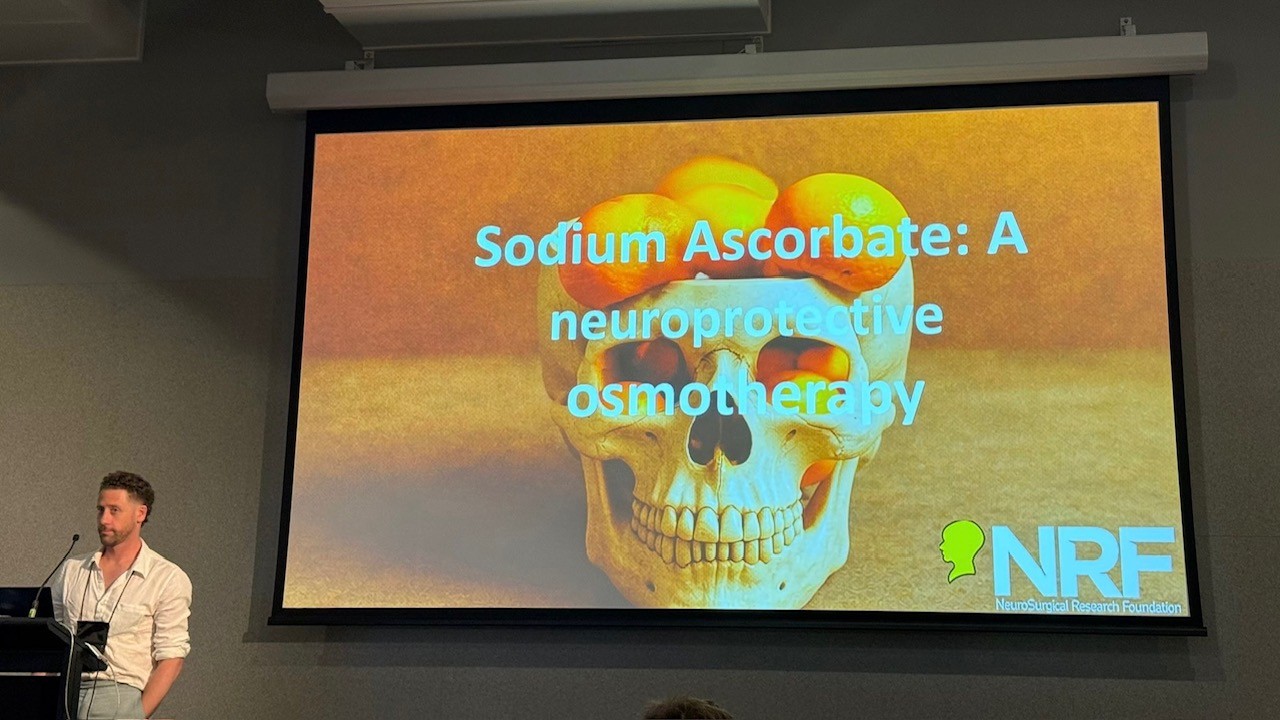
By supporting neurosurgical research in South Australia, NRF donors are helping bring promising discoveries like this closer to the patients who need them most.
Stronger research. Better outcomes for patients with traumatic brain injury.
