



.png)
Four recipients of the NRF Donald Simpson Neuroscience Scholarship—Sidra Khan, Reeya Chetan Patel, Rosie Costigan-Dwyer and Isaac Saywell—are helping drive the next generation of neuroscience research.
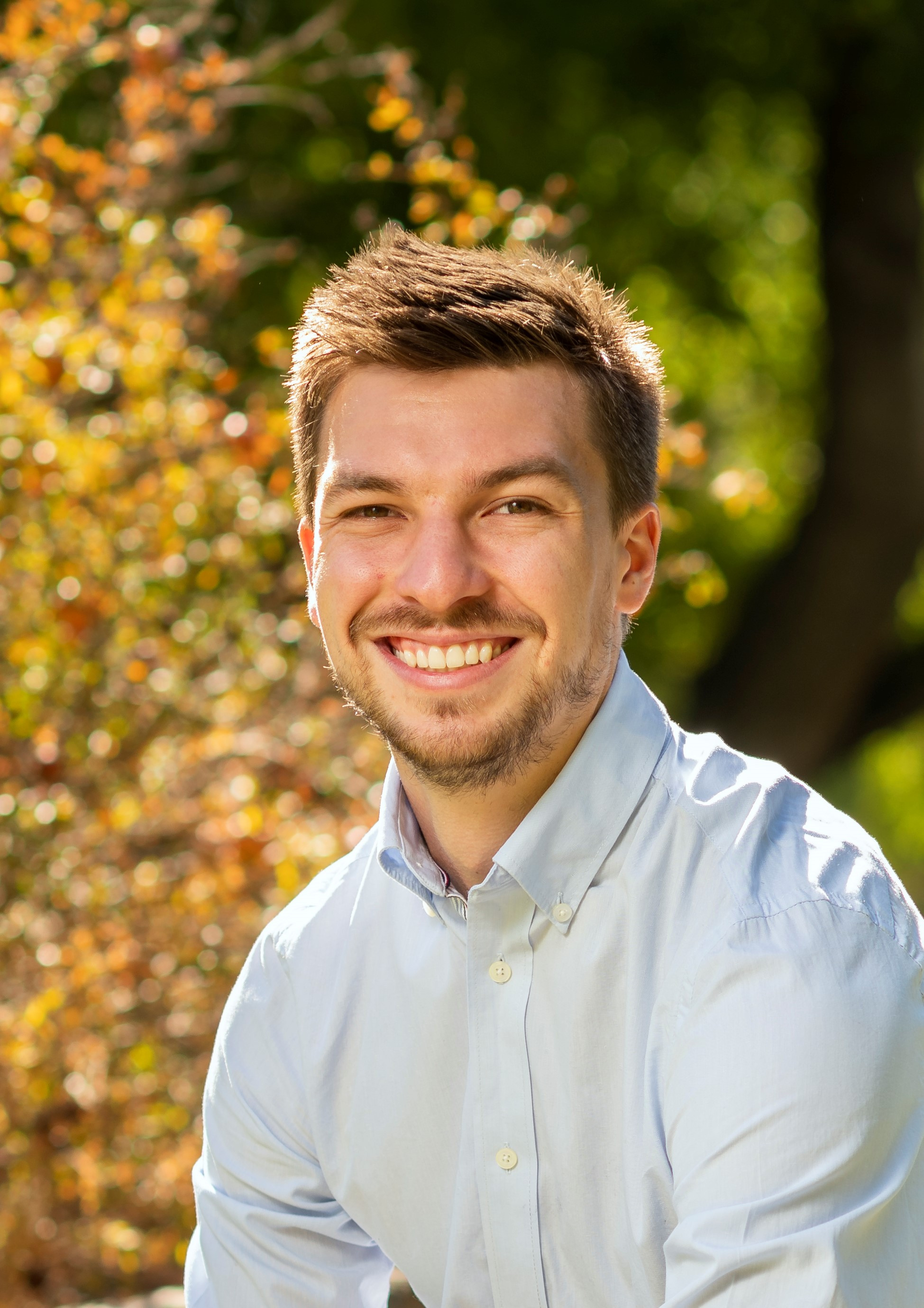
This year, three researchers—Ryan Dorrian, Rosie Costigan-Dwyer and Angus McNamara—had the opportunity to present their work at major Australasian conferences in Hobart. Ryan and Rosie are scholarship recipients, while Angus’s research is supported by the NRF. All three were recognised with awards for research on spinal cord injury and bladder function, stroke-related neurodegeneration, and the combined impact of traumatic brain injury and PTSD on Parkinson’s disease risk.
These achievements highlight the calibre of emerging neuroscience researchers supported by the NRF and demonstrate the vital role of donor generosity in enabling them to share their work on national stages.
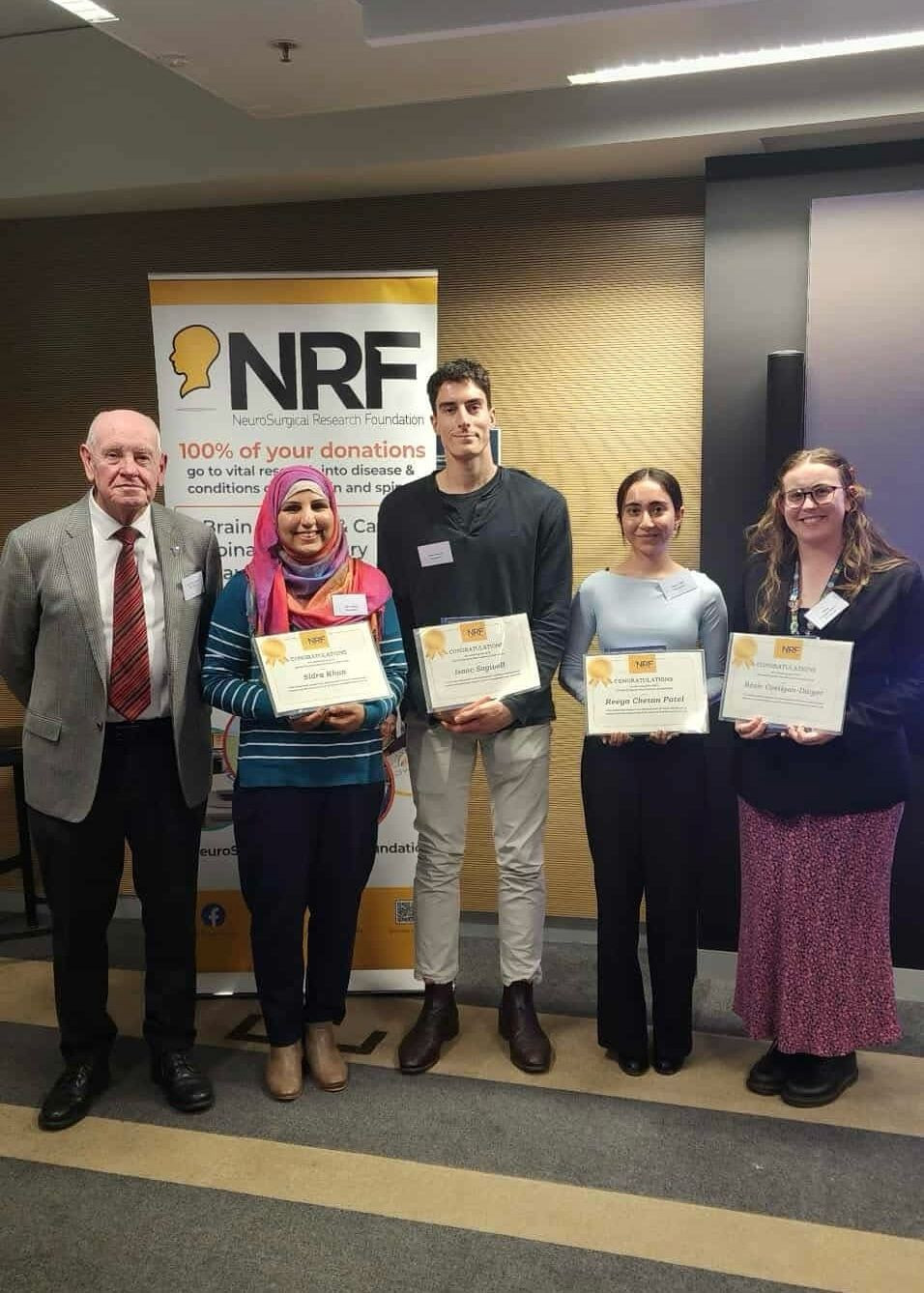
Pictured left to right: Dr Glenn McCulloch, Sidra Khan, Isaac Saywell, Reeya Chetan Patel and Rosie Costigan-Dwyer
Improving quality of life after spinal cord injury
Ryan Dorrian, from the Spinal Cord Injury Research Group at the University of Adelaide, was awarded Best Oral Presentation by a Student at the 2025 Australasia Neurotrauma Workshop.
His presentation, Let’s talk about pee, baby!, addressed a critical yet under-researched priority for people living with spinal cord injury: bladder function. While regaining bladder control is consistently ranked as a top priority by individuals with SCI, only a small proportion of preclinical studies examine urinary outcomes due to the complexity and cost of current assessment methods.
Ryan and his team have developed a simple, accessible, non-invasive tool to track the loss and recovery of urinary function following spinal cord injury. By reducing barriers to studying bladder outcomes, this work aims to accelerate the development of treatments that meaningfully improve quality of life.
Exploring hidden damage after stroke
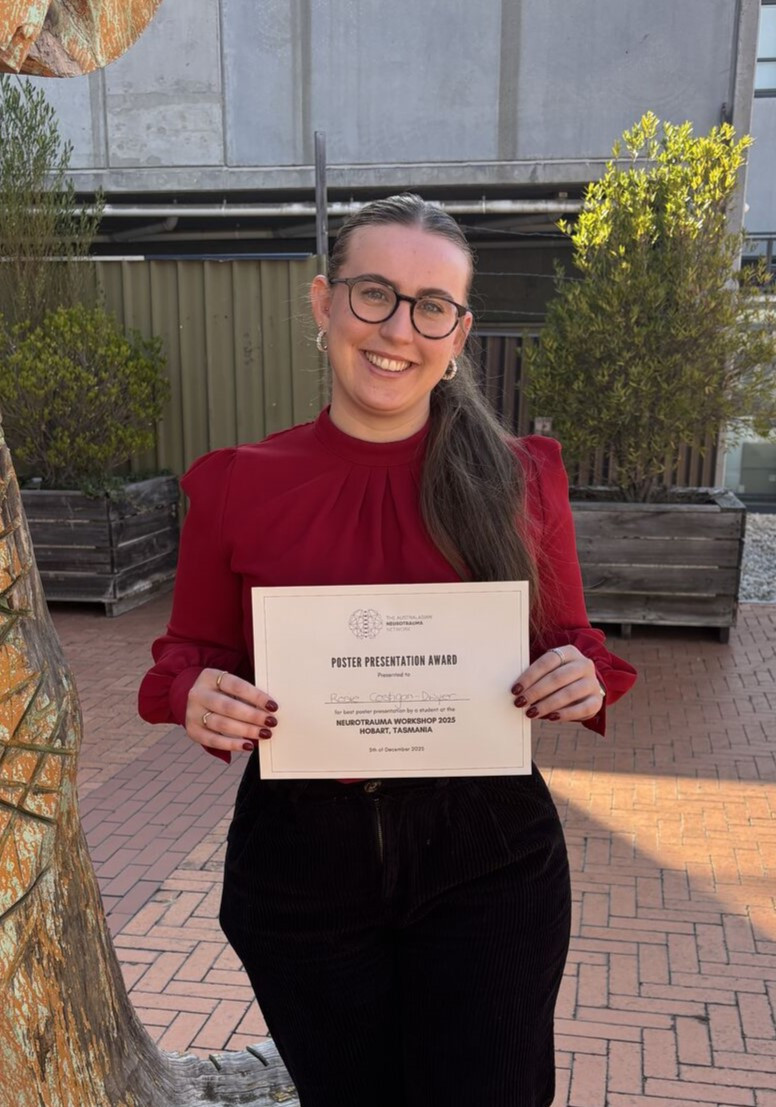
Rosie Costigan-Dwyer, a second-year PhD candidate in the Translational Neuropathology Laboratory at the University of Adelaide, was awarded Best Poster Presentation by a Student at the Australasian Neurotrauma Network Neurotrauma Workshop 2025. She also presented her research at the Cerebrovascular Biology Australasia Workshop and the Biology Australasia Symposium.
Rosie’s research focuses on secondary neurodegeneration following ischaemic stroke, a process where neurons degenerate in brain regions not directly damaged by the initial stroke but connected to the injured area. More than 70 per cent of stroke survivors experience cognitive impairment, yet the biological drivers of these long-term changes remain poorly understood.
Her work explores whether amyloid beta deposition, a feature shared with other neurodegenerative diseases, contributes to chronic blood–brain barrier disruption, vascular damage and cognitive decline months after stroke. Improving understanding of these processes may help identify new therapeutic targets to protect brain health well beyond the acute phase of stroke.
Understanding long-term brain health after injury
Angus McNamara, from the Cognition, Ageing and Neurodegenerative Diseases Laboratory at the University of Adelaide, received Best Oral Presentation by an Early Career Researcher at the Australasia Neurotrauma Workshop.
His research examined the combined impact of traumatic brain injury and probable post-traumatic stress disorder on the early, or prodromal, burden of Parkinson’s disease. By moving beyond studies that examine TBI in isolation, this work highlights the importance of considering both neurological injury and psychological distress when assessing long-term neurodegenerative risk.
Angus is also contributing to the Forecasting Impairment and Neurodegenerative Disease risk following Traumatic Brain Injury (FIND-TBI) study, a computational neurology-driven project aiming to predict long-term outcomes following TBI. The study is recruiting up to 400 participants.
Supporting the next generation of neuroscience leaders
These awards underscore the importance of investing in students and early-career researchers whose work is shaping the future of neuroscience care. Thanks to the generosity of NRF supporters, scholarship recipients like Ryan and Rosie, and NRF-supported researchers like Angus, are able to present their findings, collaborate with peers, and accelerate progress towards better outcomes for people affected by conditions of the brain and spine.
