

Transforming Stroke Recovery: Professor Renée Turner and the SND-FMT team Secures $4M Investment for Groundbreaking Research
NRF Chair of Neurosurgical Research Prof Renée Turner and the SND-FMT team have secured a major $3.5m Federal Grant to transform stroke recovery, with the NRF contributing an additional $500,000.
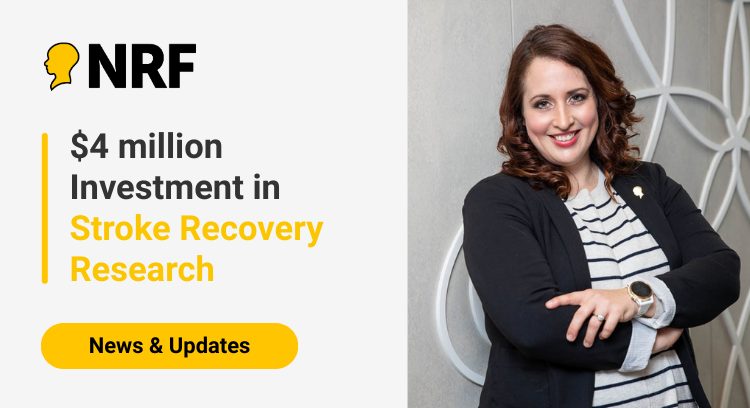
The NRF is proud to congratulate Professor Renée Turner, NRF Chair of Neurosurgical Research, Head of the Translational Neuropathology Laboratory and Head of the Discipline of Anatomy and Pathology within the School of Pharmacy and Biomedical Science at the University of Adelaide, on securing a $3,518,060 NHMRC Ideas Grant for the groundbreaking project:
“The SND-FMT Study: Targeting the microbiota-gut-brain axis to break the cycle of post-stroke secondary neurodegeneration.”
This nationally competitive NHMRC Ideas Grant recognises the scale, innovation and potential impact of the research program. The exceptional investigator team encompasses diverse discovery and clinical expertise across stroke, neurology, cognition, neuroimaging, gut microbiome, gastroenterology and bioinformatics.
In further support of this work, the NRF Board has unanimously committed an additional $500,000 over five years, bringing the total investment in the project to more than $4 million.
Why This Research Matters
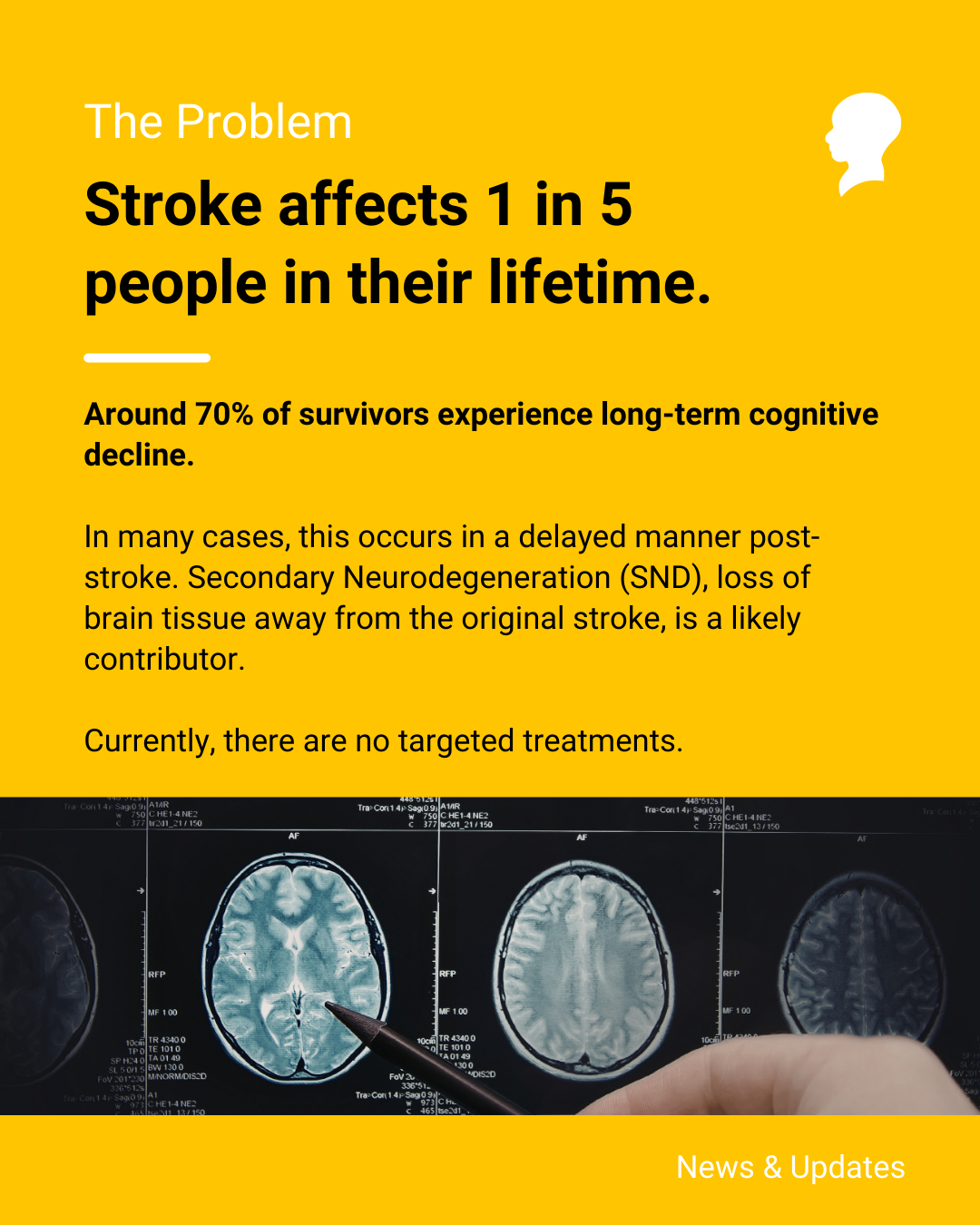
Stroke affects 1 in 5 people during their lifetime and while survival rates have improved, around 70% experience long-term cognitive difficulties — impacting memory, thinking, independence and quality of life.
What many people don’t realise is that this decline often isn’t caused by the original stroke itself. In fact, it can result from a delayed process known as secondary neurodegeneration (SND) — progressive brain tissue loss that occurs months or even years after the initial event contributing to cognitive impairment and poor long-term poor outcomes post-stroke. Currently, there are no targeted treatments for this condition.
Professor Turner’s research aims to change that.
“We know that this neurodegeneration occurs in a brain regions away from the initial stroke site. By targeting the microbiota-gut-brain axis, we are looking beyond the brain to identify new treatments that could significantly improve quality of life for stroke survivors.”
Looking Beyond the Brain
This innovative five-year program (2026–2030) explores the powerful connection between the gut and the brain — known as the microbiota-gut-brain axis.
Emerging evidence suggests that changes in gut health after stroke may contribute to inflammation and ongoing brain degeneration.
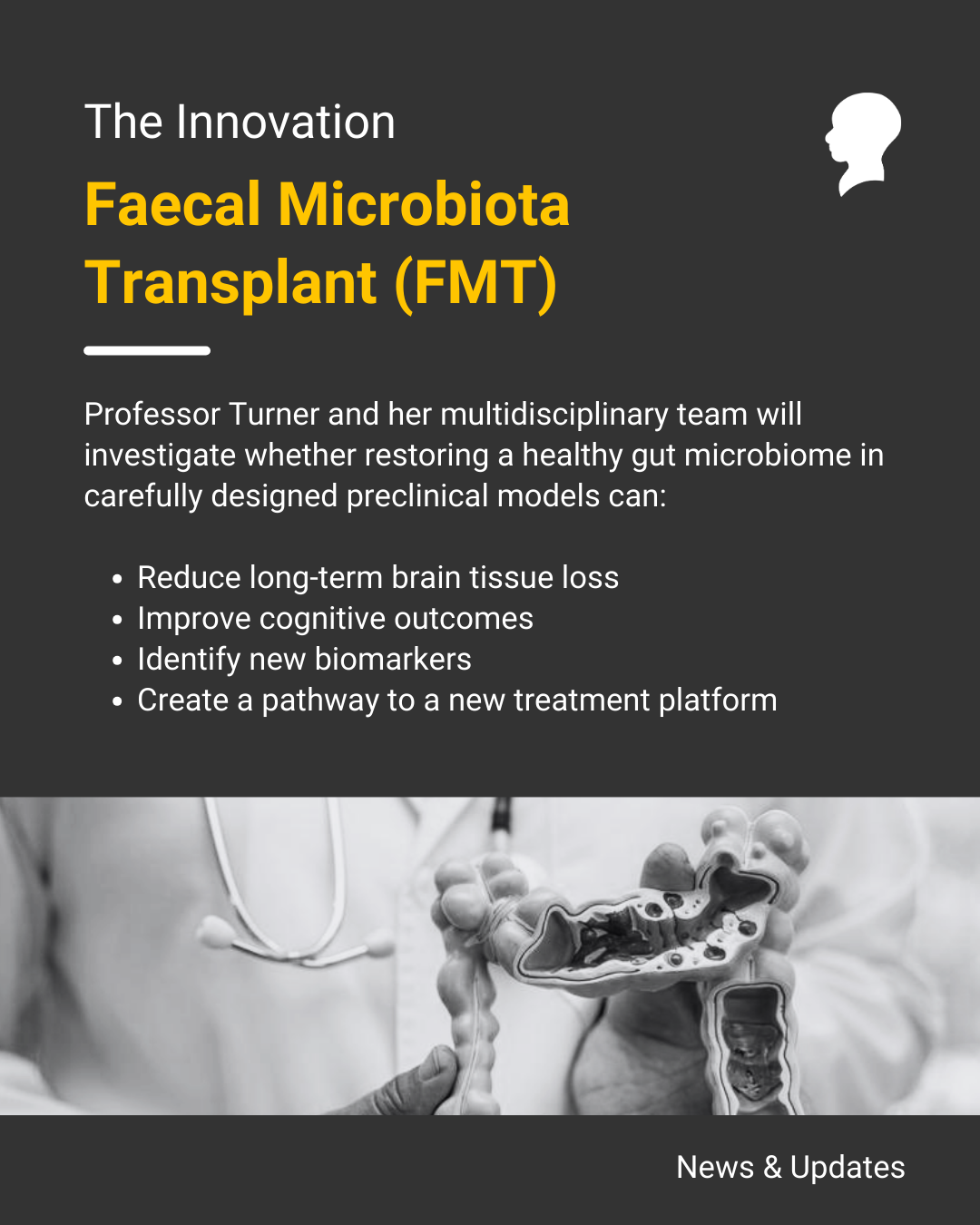
Using Faecal Microbiota Transplant (FMT) — a procedure that transfers beneficial gut bacteria from a healthy donor to rebalance the microbiome —Professor Turner and her multidisciplinary team will investigate whether restoring a healthy gut microbiome in carefully designed preclinical models can:
- Reduce long-term brain tissue loss
- Improve cognitive outcomes
- Identify new biomarkers to detect and monitor decline post-stroke SND
- Create a pathway toward a completely new treatment platform for stroke survivors
This approach shifts the focus of stroke treatment “beyond the brain”, opening an entirely new frontier in recovery science.
Building the Future of Stroke Research
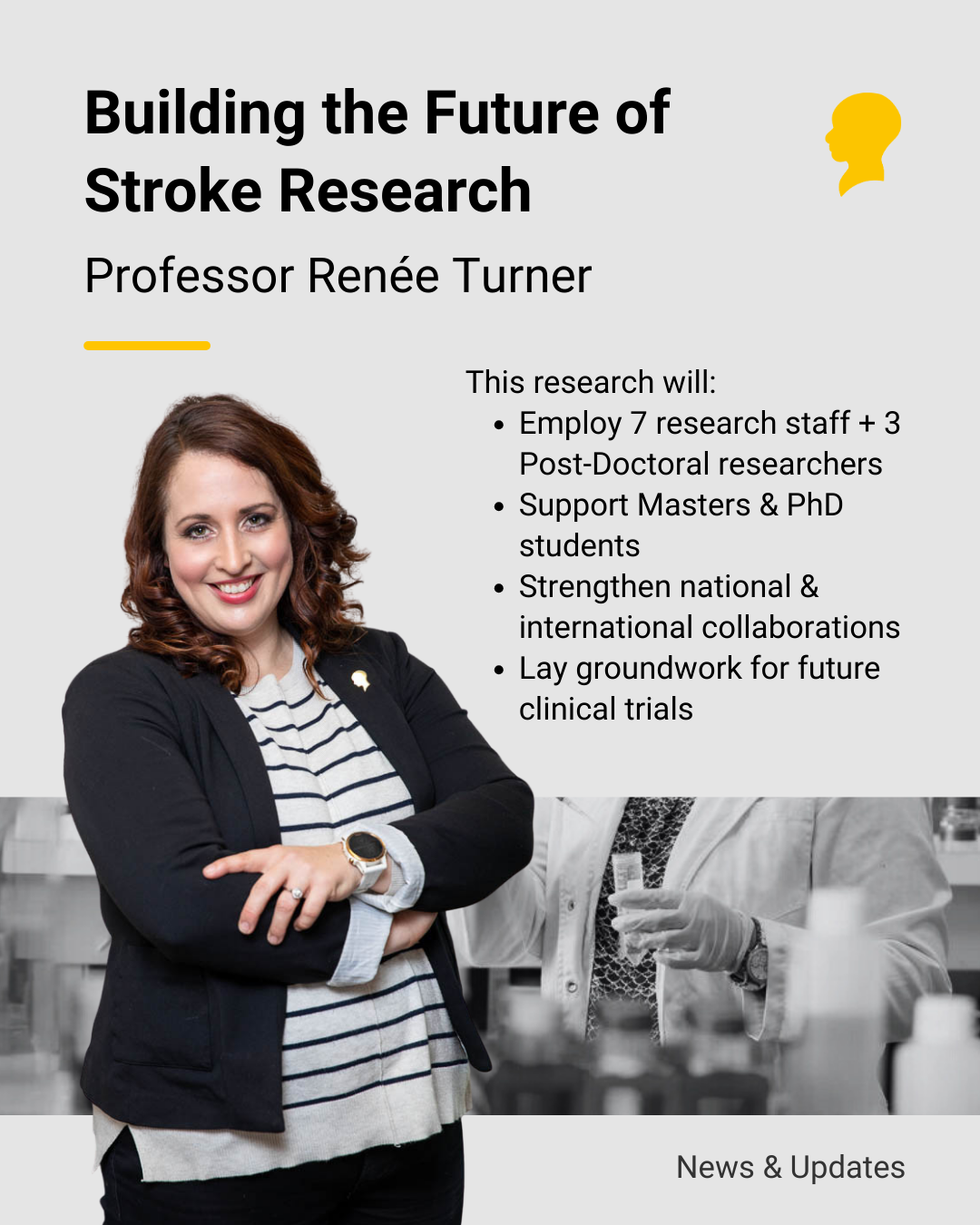
This nationally significant project will:
- Employ 7x additional research staff and 3x Post-Doctoral researchers
- Support multiple Higher Degree (Masters, PhD) students and early career scientists
- Strengthen domestic and international research collaborations
- Intentional training and mentoring pathways for emerging researchers
- Lay the groundwork for future clinical trials in stroke patients
Two current Masters students involved in Professor Turner’s lab began their journey as NRF Vacation Scholarship recipients — a powerful example of how NRF support helps build long-term research careers.
NRF’s Commitment to Transformational Research
To support this landmark achievement, the NRF has pledged an additional $500,000 over 5 years to:
- Support critical salary gaps across the five-year program
- Invest in specialised cognitive assessment technologies to strengthen research capability
This additional commitment ensures the project has the infrastructure and stability required to succeed — and accelerate translation to patient benefit.
“This funding success reflects Professor Turner’s leadership and the national importance of this research. The NRF is proud to provide full support to help ensure its success and future translation.” - Dr Nick Vrodos, Neurosurgeon and NRF President
A Milestone Year
This national funding success follows Professor Turner’s recent promotion from Associate Professor to Professor — a testament to her leadership, innovation and impact in the field of stroke and neurodegeneration research.
As NRF Chair of Neurosurgical Research, she continues to drive world-class science, mentor the next generation of researchers, and build meaningful connections between laboratory discovery and patient outcomes.
Transforming Life After Stroke
There are currently no approved treatments for post-stroke secondary neurodegeneration. Even modest improvements in long-term cognitive outcomes could dramatically improve quality of life for stroke survivors and reduce the growing burden on families and healthcare systems.
The NeuroSurgical Research Foundation is incredibly proud to support Professor Renée Turner and her team as they work to redefine what recovery after stroke can look like.