



AI transforming brain injury diagnosis
Using AI to help doctors analyse brain scans faster after traumatic brain injury
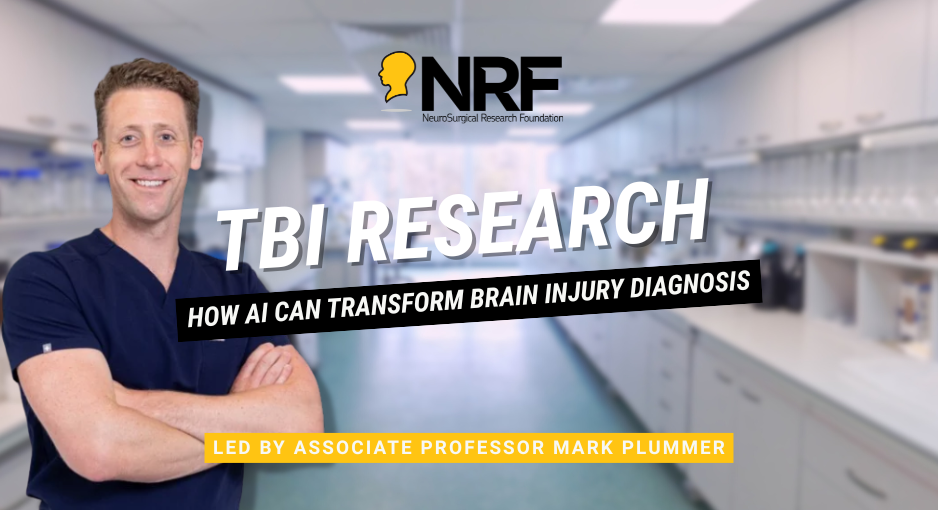
Moderate to severe traumatic brain injury (TBI) can be devastating, often leading to long-term disability or even death. CT brain scans are routinely used to assess injury severity and guide treatment, but interpreting these scans can be slow and inconsistent at a time when every decision counts.
New research supported by the NeuroSurgical Research Foundation (NRF) is exploring how artificial intelligence (AI) could help clinicians make faster and more accurate decisions for people with severe brain injury.
Led by Associate Professor Mark Plummer, Head of Intensive Care Research at the Royal Adelaide Hospital, this project aims to develop AI tools that automatically analyse CT scans from patients with moderate to severe TBI. By training algorithms on hundreds of real patient scans and clinical outcomes, the team hopes to improve the assessment of injury severity and the prediction of patient outcomes.
Currently, clinicians rely on manual scoring systems to interpret CT scans. While some newer methods are more accurate, they are not widely used due to time pressures and variation between observers. This research seeks to bridge that gap by automating CT scan analysis, delivering consistent, evidence-based assessments to support clinical decision-making in critical care.
The project also draws on large national and international collaborations, using one of the largest Australian datasets of prospectively collected CT scans in traumatic brain injury. Once developed and validated, these tools could strengthen future research and clinical trials by improving patient classification and outcome prediction.
Associate Professor Plummer is a clinician-researcher with extensive experience in neurocritical care and multi-centre clinical trials. He is an Associate Professor in the School of Medicine at The University of Adelaide and has authored more than 90 peer-reviewed publications. His work focuses on translating research into real improvements in patient care.
Thanks to the generosity of NRF supporters, this important work is now underway, equipping clinicians with smarter tools to guide care when patients need it most.
